How Students Can Build Ai Agents Without Coding?

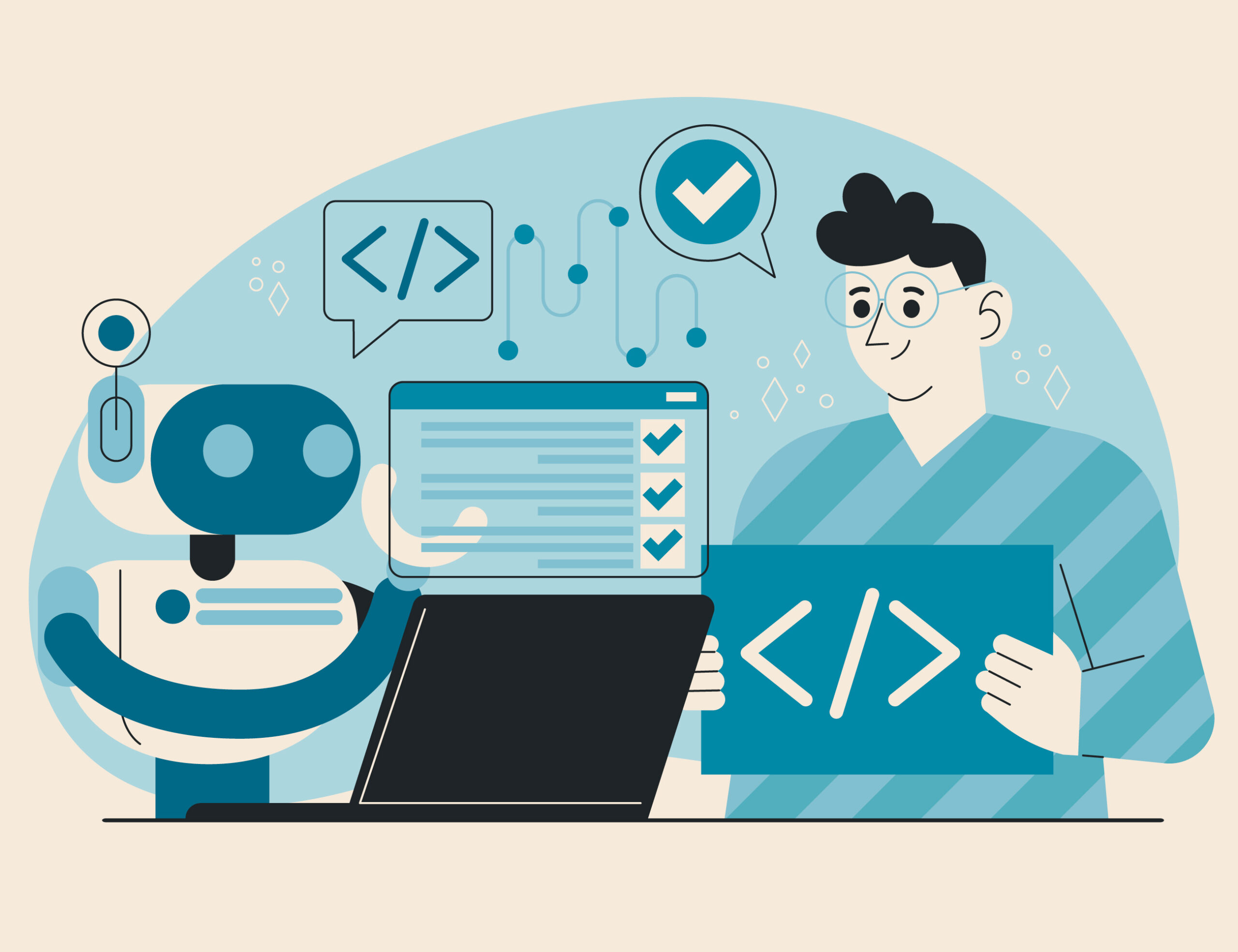
Did you know that some of today’s most powerful AI systems can now be built without writing thousands of lines of code? What once required years of programming experience can now be created using simple tools, visual workflows, and smart platforms. This shift is transforming how students learn and work with artificial intelligence.
We’re writing this blog to help students understand one important truth, which is that you don’t need to be a hardcore programmer to enter the AI world. With the rise of AI agents and no-code technologies, AI for students has become more accessible than ever, that’s why SURESH IT ACADEMY- best AI Testing institute in hyderabad has the best course for AI Testing.
Understanding What Ai Agents Are and Why They Are Essential
AI agents are intelligent systems designed to perform tasks independently by understanding inputs, making decisions, and taking actions. Unlike basic automation tools, AI agents can think, respond, learn from data, and interact with users or systems in real time.
For example, an AI agent can answer customer queries, analyze reports, schedule tasks, test applications, or even assist in software development. This is why AI agents are becoming a core part of modern workplaces. For students, learning AI agents opens doors to future-ready careers. Whether you are from IT, testing, data, or even non-technical backgrounds, AI agents for beginners are now easier to learn and apply.
The Traditional Path of Building Ai Agents-
Earlier, building AI agents was a complex and highly technical process. It was mainly handled by experienced developers, data scientists, and AI engineers. For students, this path often felt overwhelming. Traditionally, to build AI agents, one had to start with strong programming foundations. Languages like Python, Java, or C++ were mandatory. Without coding knowledge, it was almost impossible to move forward.
After programming, students needed to learn data structures and algorithms, because AI agents rely on logical decision-making. Then came machine learning concepts, such as supervised learning, unsupervised learning, and model training.
The next step involved working with AI frameworks and libraries like TensorFlow, PyTorch, or Scikit-learn. These tools required a deep understanding of mathematics, statistics, and model tuning. Once models were built, developers had to integrate them using APIs, deploy them on cloud platforms, manage databases, and continuously monitor performance.
Introducing No-code Ai Agent Platforms-
Today, students can build AI agents without coding using modern no-code and low-code platforms. These tools allow users to create intelligent agents using visual interfaces, drag-and-drop components, and pre-built AI models.
No code AI tools for students remove the fear of programming and allow learners to focus on logic, workflows, and real-world problem-solving. Instead of writing complex code, students connect actions like:
- If user asks a question → generate response
- If data changes → trigger alert
- If error appears → analyze and suggest fix
Popular no-code platforms integrate AI models, automation tools, and APIs under one dashboard. This makes AI without coding a practical reality, not just a concept. For beginners, this approach builds confidence and understanding before moving into deeper technical layers later.
How Students Can Build Ai Agents Step by Step?
With the rise of no-code and low-code technologies, students can now build AI agents in a much simpler and more practical way which’s even without deep coding knowledge.
Here’s how students can approach it step by step:
Step 1: Understand What Problem the AI Agent Should Solve
Before building anything, students must clearly define the purpose.
For example:
- Answering user questions
- Automating testing tasks
- Analyzing errors
- Handling customer support
This step helps students think logically rather than technically.
Step 2: Learn Basic AI Concepts
Students don’t need advanced math. They only need conceptual clarity such as:
- What AI does
- How AI understands prompts
- How decision-making works
- How data influences output
This builds strong fundamentals.
Step 3: Choose a No-Code AI Platform
Students can use no-code AI tools that offer:
- Visual workflow builders
- Pre-trained AI models
- Drag-and-drop logic blocks
These platforms allow students to focus on thinking and designing, not coding.
Step 4: Design the Agent Workflow
Using flow diagrams, students define:
- Input → process → output
- Conditions (if–else logic)
- Actions triggered by events
This step develops real-world problem-solving skills.
Step 5: Train the AI Agent With Examples
Students provide sample questions, commands, or test cases. The agent learns how to respond based on patterns and instructions.
This improves accuracy and behaviour.
Step 6: Test, Improve, and Optimize
Once built, students test the agent in real scenarios:
- Check responses
- Fix mistakes
- Improve clarity
- Add rules
This teaches debugging and analytical thinking.
Step 7: Apply It to Real Use Cases
Finally, students apply the AI agent to:
- Testing automation
- Chat support
- Learning assistance
- Business workflow automation
This practical exposure builds confidence and job-ready skills.
Use Cases of Ai Agents Across Industries-
AI agents are not limited to one domain. Their applications are growing rapidly across industries.
1. Software Testing
AI agents can automatically identify bugs, generate test cases, analyze failures, and reduce manual testing efforts making them highly valuable for testers.
2. IT & Automation
From monitoring systems to automating workflows, AI agents improve efficiency and accuracy.
3. Customer Support
Chatbots and virtual assistants powered by AI agents handle customer interactions 24/7.
4. Data & Analytics
AI agents can interpret dashboards, detect patterns, and generate insights.
5. Education & Learning
AI agents assist students with doubt-solving, practice sessions, and personalized learning paths. This wide usage proves why learning to build AI agents without coding is a smart career move.
The Future is Agentic: What’s Next for Business Automation?
The future of technology is agentic which means systems that don’t just respond but act independently. Businesses are shifting from traditional automation to agentic AI, where multiple AI agents work together to complete tasks end-to-end. These agents can plan, execute, evaluate, and improve processes on their own. For students, this means enormous opportunity. Companies are not just hiring programmers but they are hiring problem-solvers who understand how AI agents behave.
Learning AI agents today puts students ahead of the curve, especially as organizations adopt AI-driven testing, operations, and decision-making systems.
FAQs-
1. How can AI help you code without making errors?
-AI tools can analyze code, detect syntax mistakes, suggest improvements, and even generate optimized logic. This reduces human error and improves productivity.
2. What are the best programming languages for developing AI agents?
-Python is the most commonly used language, followed by Java and JavaScript. However, beginners can start with no-code platforms before learning programming.
3. Why choose SURESH IT ACADEMY?
-We focus on practical, job-oriented learning. With expert trainers, real-time project exposure, and AI-driven testing modules, students gain industry-ready skills instead of just theory.
CONCLUSION-
AI is no longer limited to experts with deep coding backgrounds. With the rise of no-code platforms and beginner-friendly tools, students can now build AI agents, understand intelligent automation, and prepare for future careers without fear. From testing and IT to business automation, AI agents are shaping how work gets done and students who learn these skills early gain a strong advantage.
At SURESH IT ACADEMY- top IT Institute near me we help students master AI Testingthrough structured training, real-world scenarios, and expert mentorship. Apart from this we also have courses such as Full-Stack Testing with AI, Selenium Testing with Gen AI, SalesForce with CRM and many more. Join us today.
FOLLOW US ON INSTAGRAM.