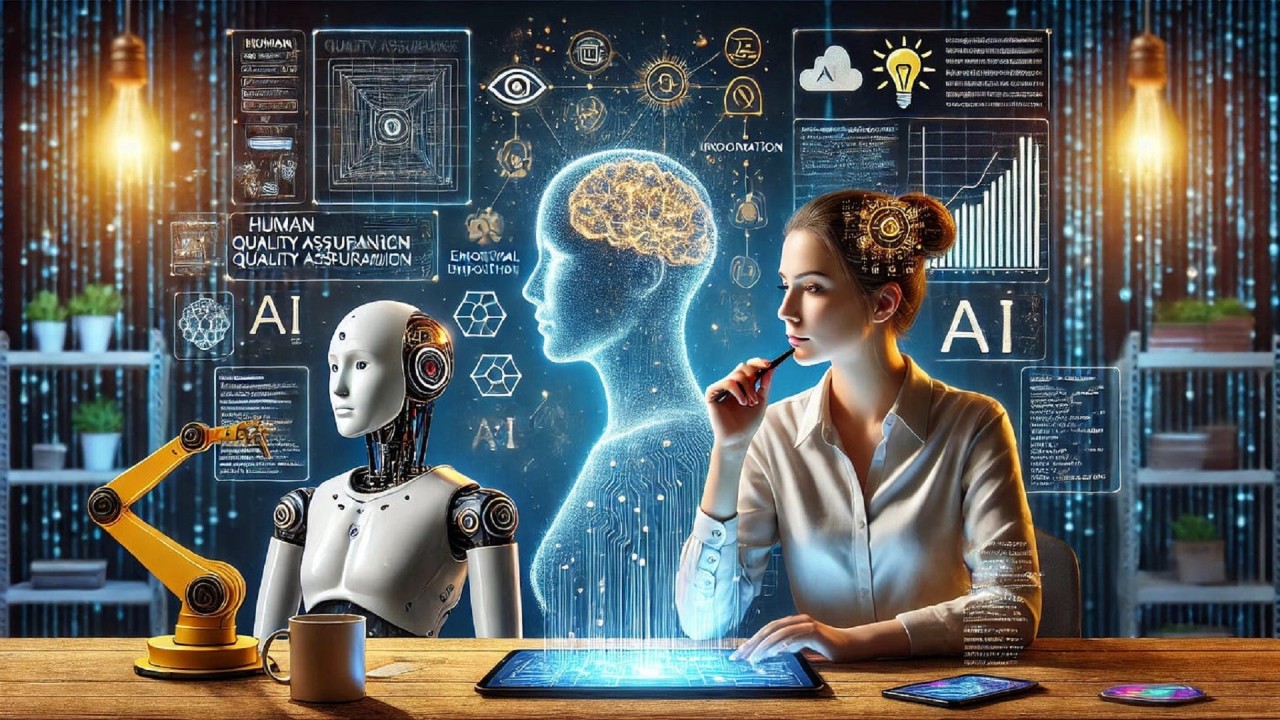
AI Vs Testers: Panic or Progress?

Will AI replace testers?” If you work in software testing, you’ve probably asked this question yourself or heard it in team meetings, WhatsApp groups, LinkedIn posts, or job forums. With AI tools making headlines almost every day, fear spreads faster than facts.
So why are we focusing on this topic right now? Because panic doesn’t build careers, but clarity does. We’ll break down AI in software testing, explain how testing roles are evolving, and answer the big career question: Is software testing a good career in 2026? And also why SURESH IT ACADEMY- best institute for AI testing in hyderabad is your best choice.
HOW WILL AI TRANSFORM SOFTWARE TESTING?
AI is not coming to replace testers, instead it’s coming to change the way testers work. Traditionally, software testing involved a lot of repetitive tasks: running the same test cases again and again, checking similar defects, and manually tracking failures. AI steps in here as a smart assistant. It studies past test results, defect patterns, and user behaviour to predict where issues are most likely to occur.
This means testers no longer have to guess where to focus. AI helps highlight high-risk areas, allowing testers to spend more time on critical thinking, exploratory testing, and real user scenarios. Instead of testing everything blindly, testers test smarter. In simple terms, AI transforms testing from a task-heavy job into a decision-driven role. The tester becomes less of an executor and more of a quality strategist.
AI IN TEST AUTOMATION-
Test automation has existed for years, but AI takes it a step further by making automation adaptive and intelligent. One of the biggest problems in automation is maintenance. A small UI change can break multiple scripts. AI-powered automation tools can self-heal, they understand patterns and adjust test scripts automatically when elements change. This saves enormous time and reduces frustration.
AI also helps in:
- Automatically generating test cases from user actions
- Optimising regression suites by removing redundant tests
- Identifying flaky tests that fail without real issues
However, AI does not decide what should be tested. It only assists in how efficiently it can be tested. Testers still define scope, validate results, and decide business impact. So while AI makes automation faster and smarter, human testers remain in control.
AI’S ROLE IN DIFFERENT TESTING PHASES-
AI supports testing across multiple stages, but its role varies in each phase.
- Test Planning: AI analyses historical data to suggest focus areas, helping teams prioritise high-risk modules. Testers still make the final call.
- Test Design: AI can auto-generate test cases from requirements or user stories. Testers refine these cases to ensure real-world relevance.
- Test Execution: AI-powered tools execute tests faster and adapt to changes, especially in regression testing. Manual testing remains essential for usability and exploratory testing.
- Defect Analysis: AI groups similar defects and highlights patterns, speeding up root-cause analysis. Testers interpret the findings and assess business impact.
- Test Maintenance: AI reduces effort by keeping automation scripts updated, but testers ensure accuracy and reliability.
Overall, AI acts as a support system, not a decision-maker. It enhances efficiency while testers provide judgment, creativity, and accountability.
TESTING ROLES MOSTLY AFFECTED BY AI-
Not all testing roles are impacted equally. Let’s be transparent.
More affected roles:
- Purely repetitive manual testers
- Testers who only execute predefined test cases
- Roles with no automation or domain exposure
Less affected (and growing) roles:
- Automation testers
- Test analysts
- QA engineers with domain knowledge
- Testers who understand AI tools
This doesn’t mean manual testers are outdated. It means manual testers need to upskill just like they did during the automation wave.
BUILDING A FUTURE-PROOF TESTER MINDSET-
If you’re wondering, is software testing a good career in 2025? The answer depends on how you approach it.
A future-proof tester:
- Learns automation basics
- Understands how AI tools work (not builds them)
- Thinks like a user, not a script
- Collaborates with developers and product teams
AI rewards testers who adapt, not those who resist change.
Instead of fearing AI, smart testers ask:
- How can AI reduce my workload?
- How can I deliver more value?
- What skills should I add next?
This shift from fear to strategy is what keeps careers alive.
FAQs
1. Do you think AI will replace cyber specialists?
–Cybersecurity relies heavily on human intuition, ethical decision-making, and understanding attacker behaviour. AI supports cyber specialists but cannot replace them.
2. What makes AI a suitable choice for test automation?
–AI handles repetitive tasks efficiently, adapts to UI changes, and improves test accuracy over time making automation smarter and faster.
3. What if AI-powered apps become the norm?
–Even then, testers will be needed to validate logic, user experience, compliance, and security. Technology evolving doesn’t eliminate quality checks but it increases their importance.
CONCLUSION-
AI is not here to take away testing careers but it’s here to reshape them. The testers who stay calm, curious, and willing to learn will thrive. Instead of panic, focus on skill growth. Instead of fear, focus on value. Software testing careers aren’t ending but they’re evolving.
At SURESH IT ACADEMY- top institute for learning AI testing, we prepare our students for the future. We have courses starting from manual testing, automation, and AI testing skills, guided by industry experts who understand real-world demands. If you’re serious about building a stable, future-ready testing career, this is where clarity meets opportunity. Join us today.