Learn Playwright: A Guide for Automation Testers

introduction
According to recent software industry trends, over 70% of modern applications now rely on automation testing to speed up releases and maintain software quality. Traditional tools are still used, but modern frameworks like Playwright are gaining massive popularity because they offer faster, smarter, and more reliable testing.
That’s why understanding what is Playwright in automation testing has become important for anyone entering the testing field. In this blog, we will explore everything about Playwright automation, including how it works, how to install it, its advanced features, and why SURESH IT ACADEMY is the best institute for learning playwright automation with real-time projects and industry experts.
WHAT IS PLAYWRIGHT & WHO MADE IT?
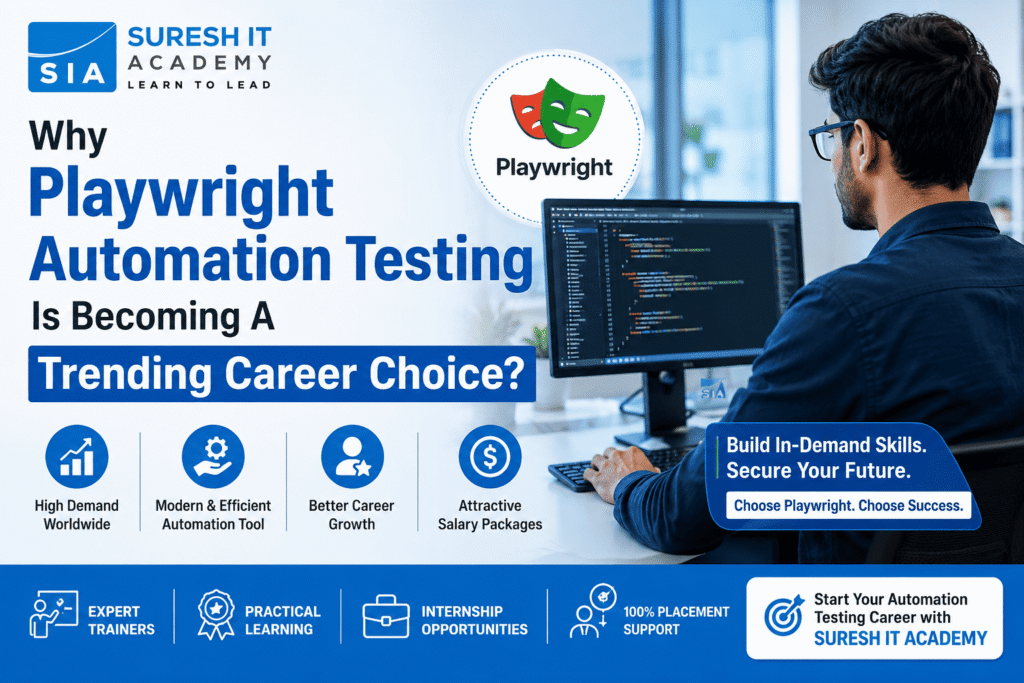
Playwright is a modern open-source playwright automation tool used for web automation testing and end-to-end testing of web applications. It helps developers and testers automate browser actions such as clicking buttons, filling forms, navigating pages, and validating user interface elements.
The Playwright automation framework was developed by Microsoft and officially released in 2020. It was designed to overcome many limitations of older automation tools and provide a more reliable solution for testing modern web applications.
Playwright supports automation across multiple browsers including Chromium, Firefox, and WebKit, which means testers can run the same tests across different browsers without major changes
KEY FEATURES OF PLAYWRIGHT
Let’s look at the features of playwright-
- Supports cross-browser web automation testing
- Works with multiple languages like JavaScript, Python, Java, and .NET
- Provides built-in tools for end-to-end testing
- Enables fast and reliable browser automation
Offers extensive guidance through official playwright documentation
HOW TO INSTALL PLAYWRIGHT & WRITE YOUR FIRST TEST?
If you are wondering how to use Playwright for web automation testing, the installation and setup process is simple and beginner friendly.
Step 1: Install Node.js
Playwright requires Node.js to run automation scripts. You can download Node.js from the official website and install it on your system.
Step 2: Install Playwright
Open your terminal or command prompt and run the following command:
Step 3: Install Browsers
Playwright automatically installs supported browsers for testing.
Step 4: Write Your First Test
Create a test file and write a simple automation test.
Step 5: Run the Test
Execute the test using a command prompt.
ADVANCED FEATURES & BEST PRACTICES
One major reason why companies prefer the Playwright automation tool is its powerful features designed for modern web automation testing environments.
- Auto Waiting Mechanism- Playwright automatically waits for page elements to load before performing actions, which reduces test failures.
- Cross Browser Testing- It allows testers to run the same automation tests across multiple browsers.
- Headless Testing- Tests can run without opening a browser window, making execution faster and more efficient.
- Network Interception- Playwright allows testers to capture and modify network requests for advanced testing scenarios.
- Parallel Test Execution- Multiple tests can run simultaneously, saving time and improving testing efficiency.
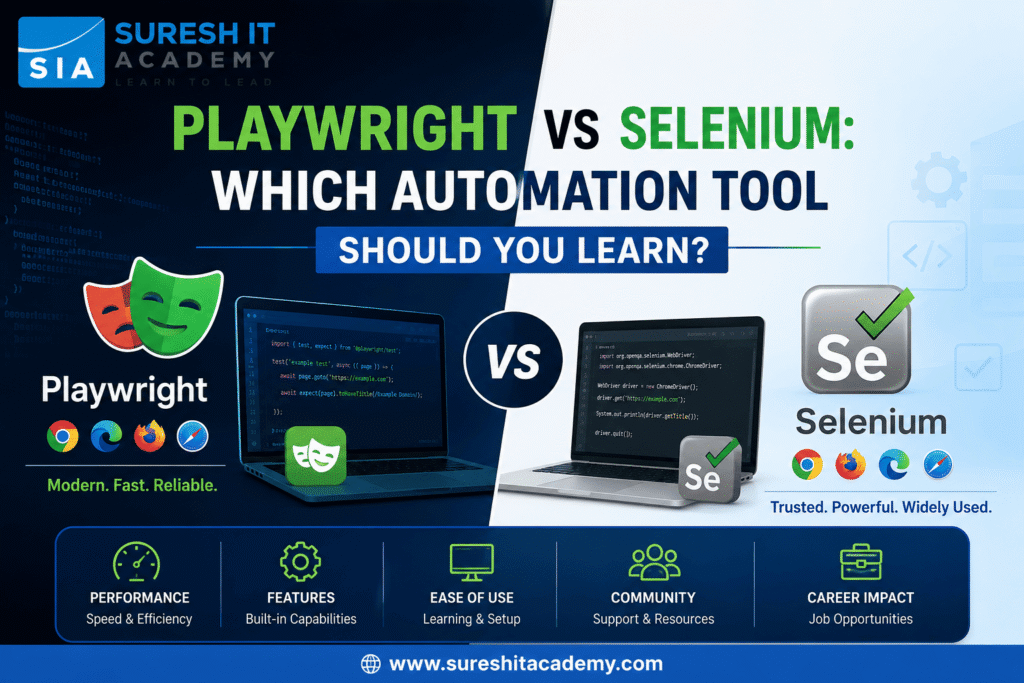
COMPARISON BETWEEN SELENIUM & PLAYWRIGHT
| Feature | Selenium | Playwright |
| Developed By | Open-source community | Microsoft |
| Browser Support | Chrome, Firefox, Edge, Safari | Chromium, Firefox, WebKit |
| Speed | Moderate | Faster execution |
| Waiting Mechanism | Requires explicit waits | Built-in auto waiting |
| Parallel Testing | Needs extra configuration | Built-in support |
| Network Interception | Limited | Advanced support |
| Ease of Setup | Slightly complex | Beginner friendly |
BEST PRACTICES FOR PLAYWRIGHT AUTOMATION
- Follow structured coding practices
- Use the Page Object Model (POM) for better test organization
- Keep test scripts modular and reusable
- Use debugging tools and logs provided in playwright documentation
- Integrate automation tests with CI/CD pipelines
HOW AI IS CHANGING PLAYWRIGHT TESTING WITH MCP?
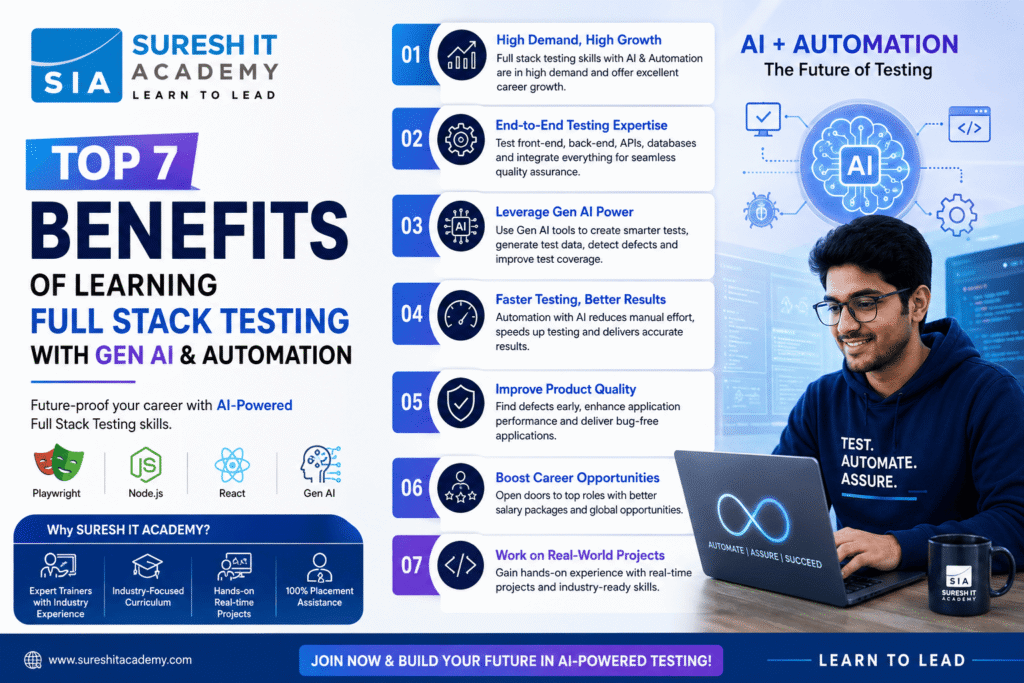
AI is now playing a major role in improving web automation testing tools. One emerging concept is Model Context Protocol (MCP), which allows AI models to interact with testing frameworks and improve automation processes.
BENEFITS OF AI IN PLAYWRIGHT TESTING
1. Automated Test Creation- AI can generate automation scripts automatically based on user behavior.
2. Self-Healing Tests- If UI elements change, AI can automatically update test scripts.
3. Intelligent Bug Detection- AI can analyze test results and identify patterns that indicate potential bugs.
4. Smarter Test Execution- AI prioritizes critical tests to run first, improving testing efficiency.
FAQ’s
1. How to start automation testing with no coding background?
A. Beginners can start automation testing by first understanding basic programming concepts like JavaScript or Python.
2. What is the best way to learn automation testing?
A. The best way to learn automation testing is through hands-on practice, real-world projects, and structured learning programs.
3. Why choose Suresh IT Academy?
A. We at top playwright automation institute in hyderabad provide industry-focused training programs designed to help students master technologies like automation testing, Full Stack AI testing, manual testing and many more with placement assistance.
CONCLUSION
Playwright has quickly become one of the most powerful frameworks for web automation testing and end-to-end testing. Developed by Microsoft, the Playwright automation tool offers advanced capabilities such as cross-browser testing, automatic waiting mechanisms, faster execution, and strong integration with modern development workflows.
If you want to build strong expertise in Playwright automation and automation testing, we at SURESH IT ACADEMY have courses with real time projects, top class faculty, offline/online classes and many more. Join us today.
FOLLOW US ON INSTAGRAM.