TOP AI TECHNOLOGIES YOU SHOULD KNOW IN 2026

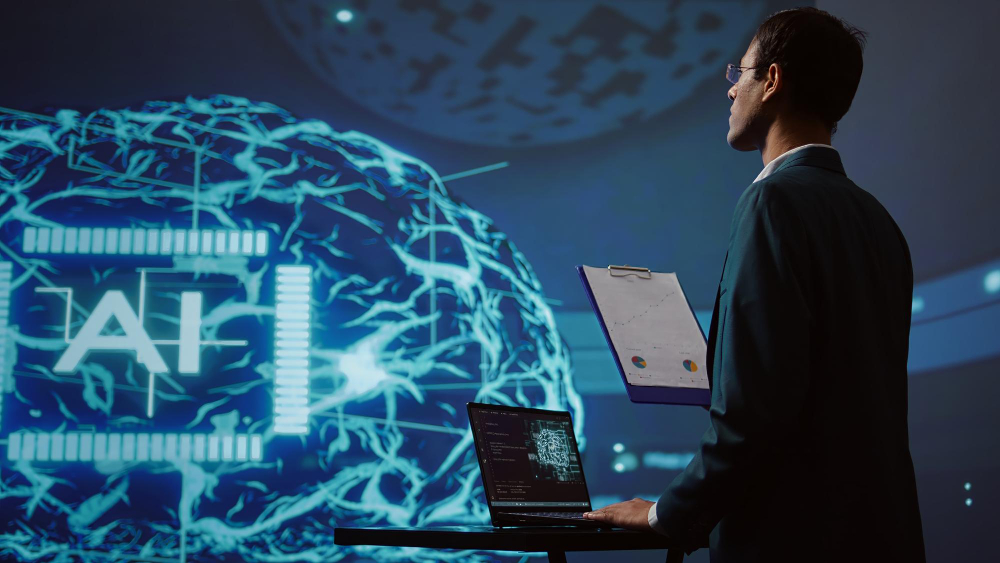
Artificial Intelligence is no longer a futuristic concept but it’s already reshaping how the world works, especially in the IT sector. From writing code and testing software to predicting user behaviour and automating decisions, AI is quietly running behind the scenes of today’s most powerful technologies.
If you’re curious about Top AI technologies in 2025, emerging AI technologies to watch, how AI can impact your career in IT, and also why to choose SURESH IT ACADEMY- best AI institute in hyderabad for your career upgrade.
WHY AI TECHNOLOGIES MATTER IN TODAY’S WORLD?
AI technologies matter because they help machines think, learn, and make decisions like humans but only faster and at scale.
Artificial intelligence technologies are powering automation, improving accuracy, reducing manual effort, and enabling smarter business decisions. In the IT industry, AI is transforming software development, testing, cybersecurity, data analysis, and cloud operations. Companies today are not just looking for coders or testers; they are looking for professionals who understand AI models, AI algorithms, and AI applications.
TOP 15 AI TECHNOLOGIES THAT MATTER IN TODAY’S WORLD-
Below is a listicle-style breakdown of the Top AI techhttps://sureshitacademy.com/#nologies shaping industries worldwide.
1. Machine Learning (ML)-
Machine learning enables systems to learn from data and improve without explicit programming. It is widely used in fraud detection, recommendation engines, spam filters, and predictive analytics. ML is the backbone of most modern AI applications.
2. Deep Learning-
Deep learning is an advanced subset of machine learning that uses neural networks with multiple layers. It powers image recognition, speech processing, autonomous vehicles, and complex AI models like ChatGPT.
3. Natural Language Processing (NLP)-
Natural language processing allows machines to understand and respond to human language. NLP is used in chatbots, voice assistants, sentiment analysis, resume screening, and language translation tools.
4. Computer Vision-
Computer vision helps machines interpret and understand visual data from images and videos. It is used in facial recognition, medical imaging, quality inspection, and surveillance systems.
5. Generative AI-
Generative AI creates new content such as text, images, videos, and code. Tools like ChatGPT, Midjourney, and Copilot are examples of how generative AI is changing content creation and software development.
6. Reinforcement Learning-
Reinforcement learning trains AI through trial and error using rewards and penalties. It is widely used in robotics, gaming, self-driving cars, and real-time decision-making systems.
7. Neural Networks-
Neural networks are inspired by the human brain and form the core of many AI models. They help process complex data patterns and are fundamental to deep learning applications.
8. Robotic Process Automation (RPA)-
RPA uses AI to automate repetitive, rule-based business tasks. It is commonly used in banking, HR, finance, and IT operations to reduce manual workload.
9. Speech Recognition-
Speech recognition converts spoken language into text. It powers virtual assistants, call center automation, voice commands, and accessibility tools.
10. Predictive Analytics-
Predictive analytics uses AI algorithms to forecast future outcomes based on historical data. It is essential in marketing, finance, healthcare, and demand forecasting.
11. Expert Systems-
Expert systems simulate decision-making abilities of human experts. They are used in diagnostics, troubleshooting, and advisory systems.
12. Edge AI-
Edge AI processes data locally on devices instead of cloud servers. It improves speed, security, and efficiency in IoT devices, smart cameras, and wearables.
13. Autonomous Systems-
Autonomous systems can operate independently with minimal human intervention. Examples include self-driving cars, drones, and automated manufacturing robots.
14. Recommendation Systems-
Recommendation systems analyze user behavior to suggest products or content. They are widely used by platforms like Netflix, Amazon, and Spotify.
15. Explainable AI (XAI)-
Explainable AI focuses on making AI decisions transparent and understandable. It is crucial in healthcare, finance, and legal applications where trust and accountability matter.
REAL-WORLD APPLICATIONS OF AI TECHNOLOGIES-
AI technologies are used in real life more than we realize. From fraud detection in banking and personalized shopping experiences to AI-powered testing tools and smart assistants, artificial intelligence technologies are deeply embedded in everyday systems. In IT, AI applications improve software quality, automate testing, enhance cybersecurity, and optimize cloud infrastructure.
AI TECHNOLOGIES VS. TRADITIONAL TECHNOLOGIES-
| Aspect | AI Technologies | Traditional Technologies |
| Learning Ability | Learns from data | Fixed programming |
| Automation | Intelligent automation | Manual or rule-based |
| Decision Making | Data-driven decisions | Human-dependent |
| Scalability | Highly scalable | Limited scalability |
| Adaptability | Continuously improves | Requires manual updates |
FAQs-
1. How is AI changing technologies?
-AI is making technologies smarter by enabling automation, predictive insights, faster decision-making, and improved accuracy across systems.
2. What are the best AI tools for coding?
-Some popular AI tools for coding include GitHub Copilot, ChatGPT, Tabnine, and Amazon CodeWhisperer.
3. Why to choose SURESH IT ACADEMY?
At SURESH IT ACADEMY we focus on industry-relevant training with real-time projects, expert mentorship, and practical exposure to modern technologies like AI, DevOps, testing, and automation.
CONCLUSION-
Artificial intelligence technologies are redefining how the world works, especially in the IT sector. From machine learning and deep learning to generative AI and explainable AI, the Top AI technologies in 2025 are driving innovation, efficiency, and smarter decision-making.
At SURESH IT ACADEMY-top IT institute near me stands out by offering practical, career-focused training guided by industry experts for AI Testing courses.
FOLLOW US ON INSTAGRAM.